Record Breaker Meditation
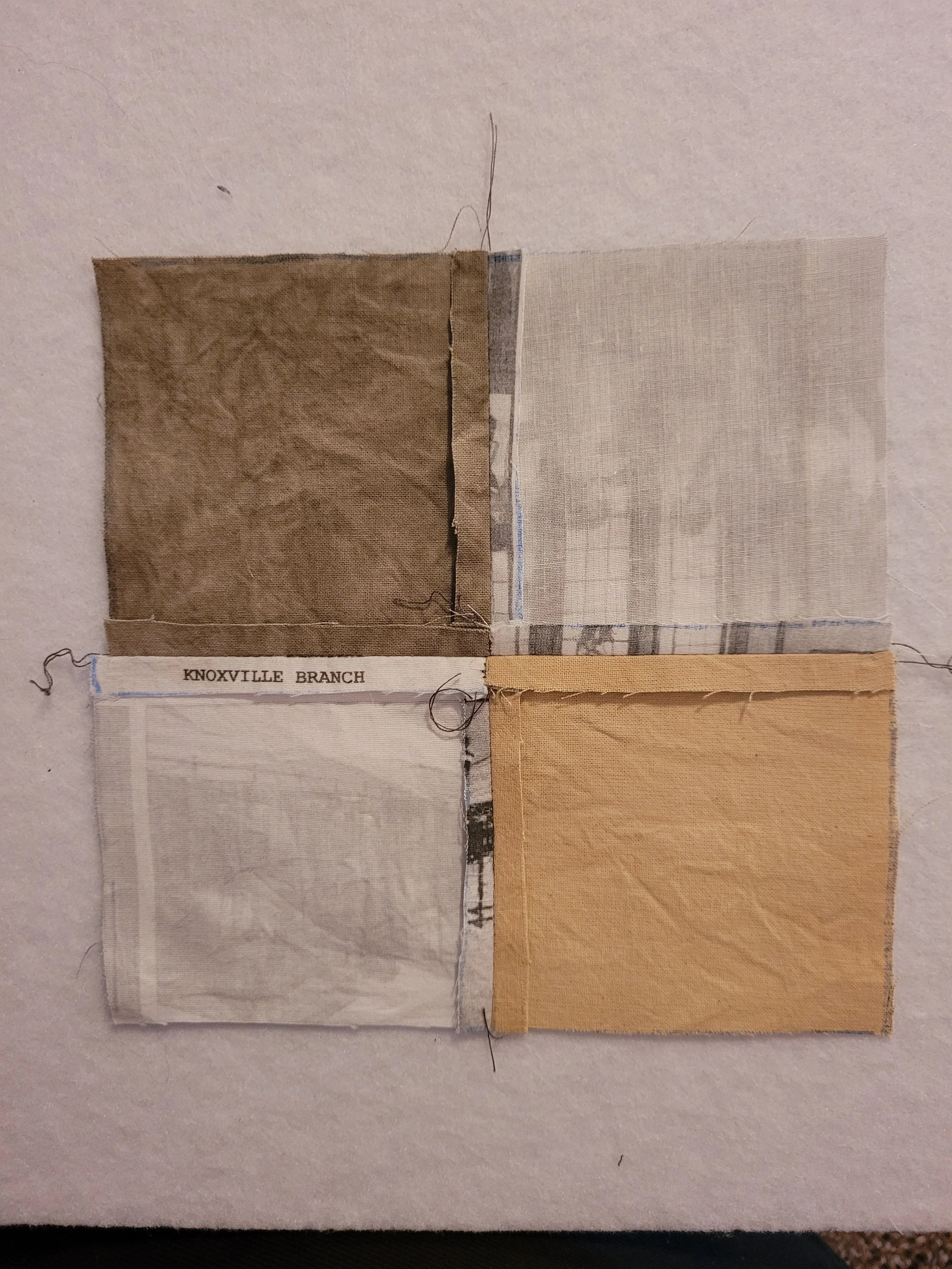
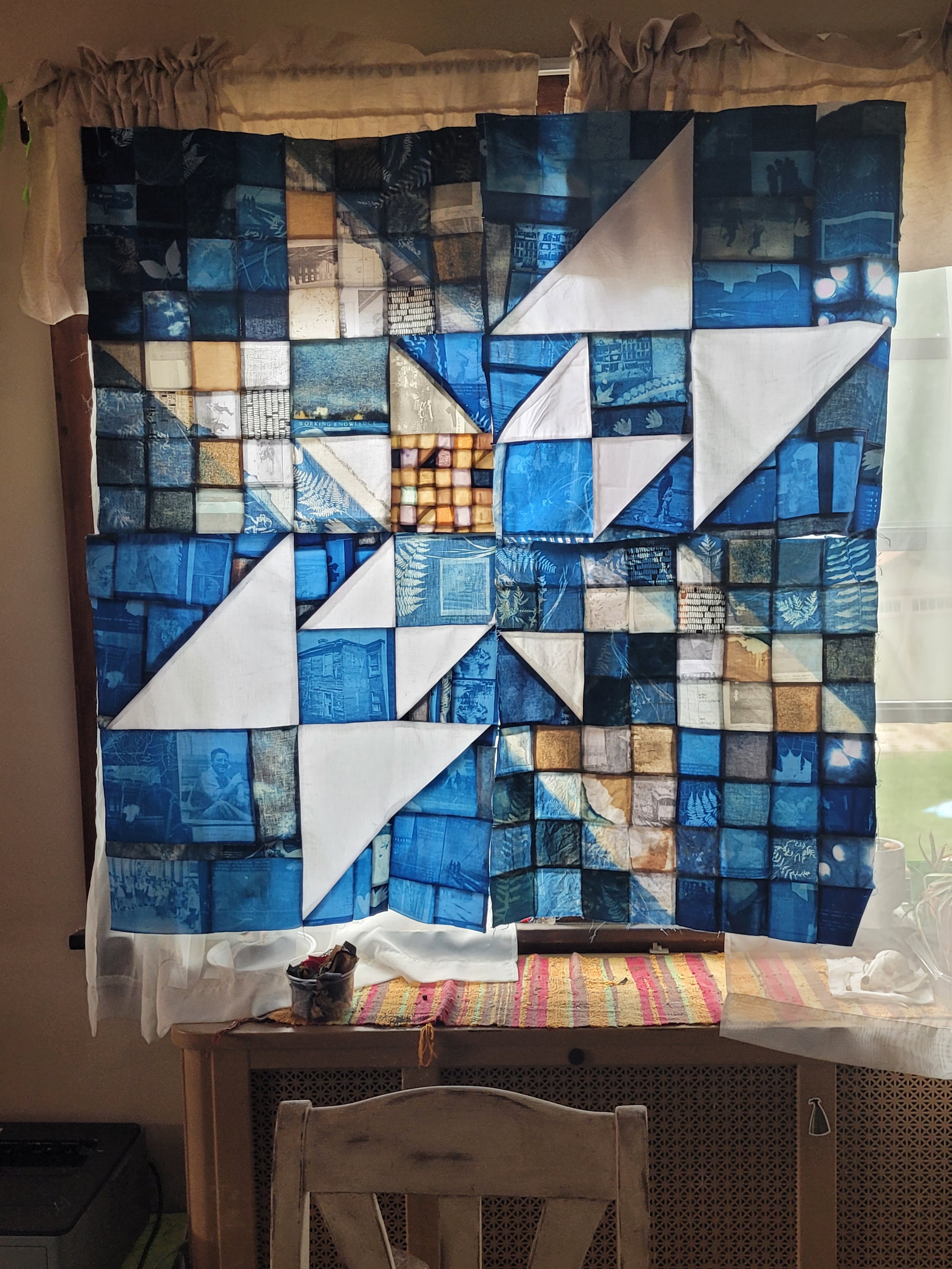
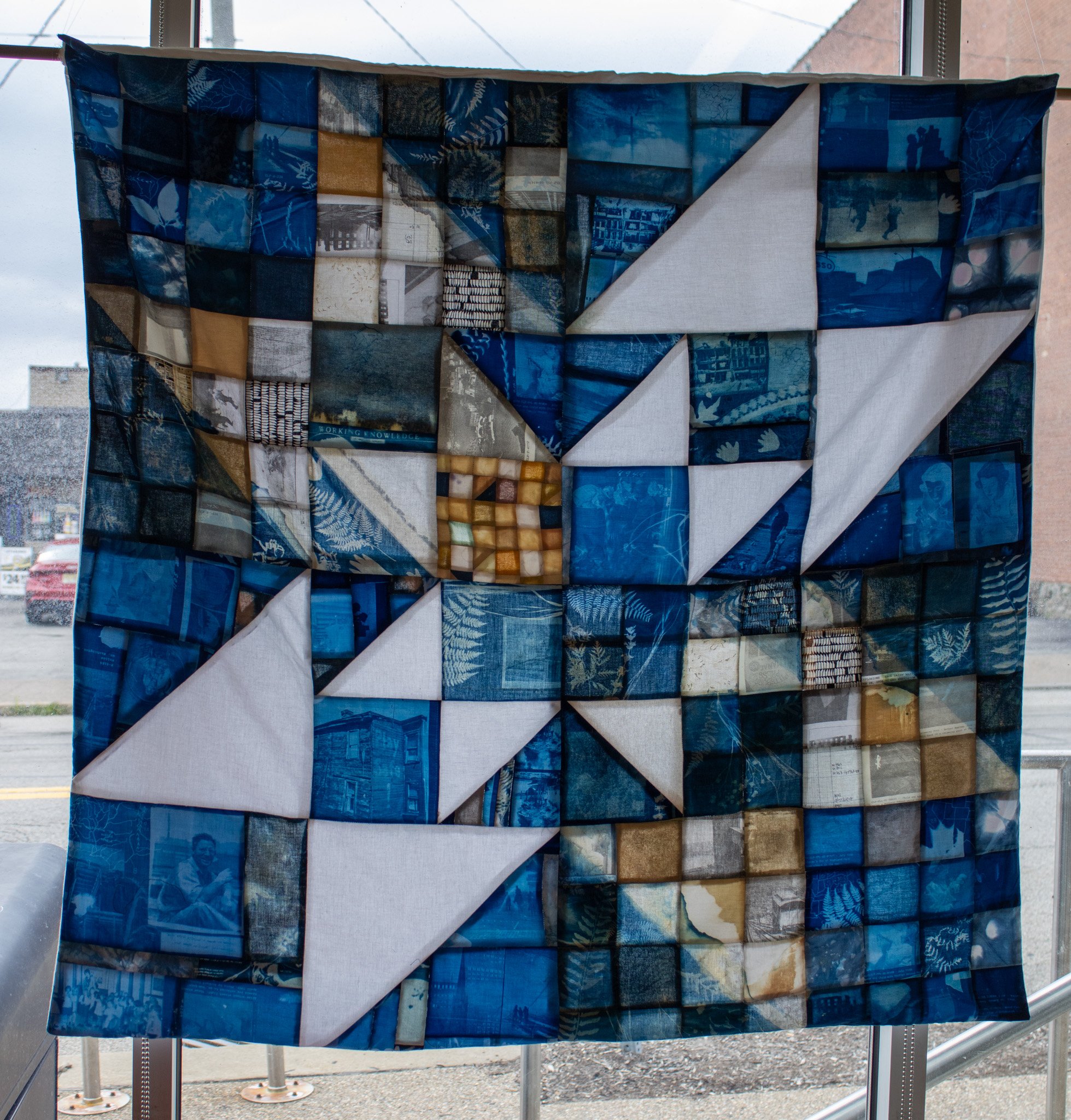
Thrifted cotton, rayon, linen, and cyanotype sheets, printed with cyanotype solution and inkjet printer. Cotton dyed with natural materials (sage, thyme, yarrow, marigold, cosmos, willow, pine, iron, indigo).
A contrasting eight-pointed star, made with photo negatives from the CLP archives printed on fabric in whites and blues. Over the four months that I made these images, I’ve been focused on the challenges of conservation and maintenance through records, representation, and reproduction. Every record shows what we value and care to preserve, requires a choice and a trade-off. Even with our best efforts, they are still subject to incursions or intrusions, the same way water coalesces unseen underground.
When you hear a broken record, two paths emerge. On one, something repeated exactly, over and over to the point of exhaustion. On the other, something never done before – a world record broken. Both happen through repetition, but with opposite results. I’ve been thinking about the goal of daily practice & labor, showing up consistently to do the same thing, and either recognizing or hoping that it won’t simply be the same thing. Many of the images in this quilt appear multiple times, even using identical negatives, but there are no identical copies.
I’m also thinking about breakers in terms of waves, water crashing on the shore. In addition to Pittsburgh’s three major rivers, there are dozens of smaller streams and tributaries that feed the area, many of which have been encased underground as part of civic waste management projects – now existing as invisible “ghost rivers”. Even where we cannot see it, these waters are moving every day, many times a day, in cycles, changing the borders in small and massive ways.
A card catalog record is a tiny duplicate of the original, pointing you back to the source. That’s what I’m trying to emulate with this piece
Special thanks to the Carnegie Library of Pittsburgh, particularly the dedicated and brilliant staff of the Knoxville branch library, and to the Vivian Ann Davidson Hewitt Initiative which supported this residency and the work displayed here.
Process
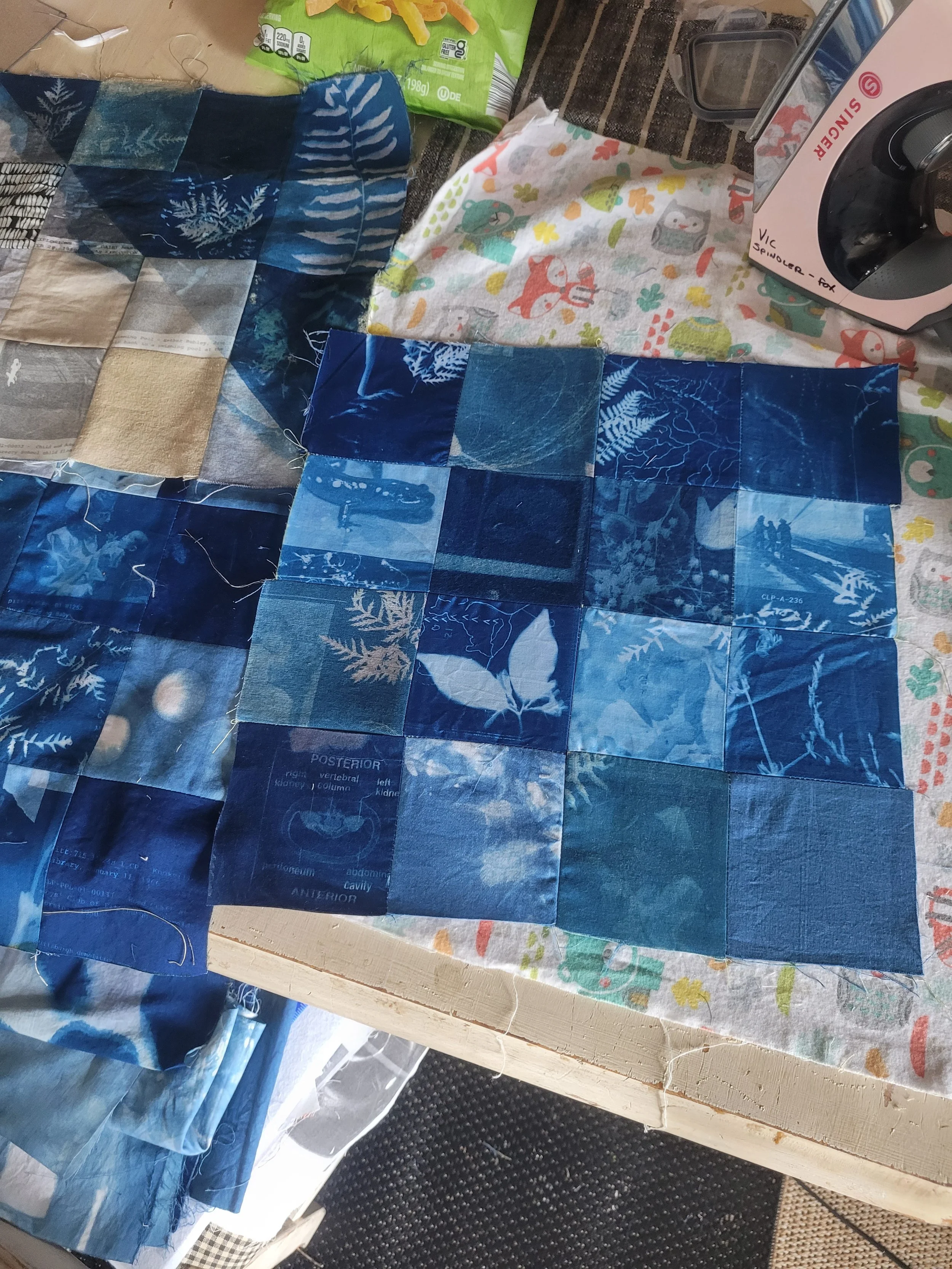
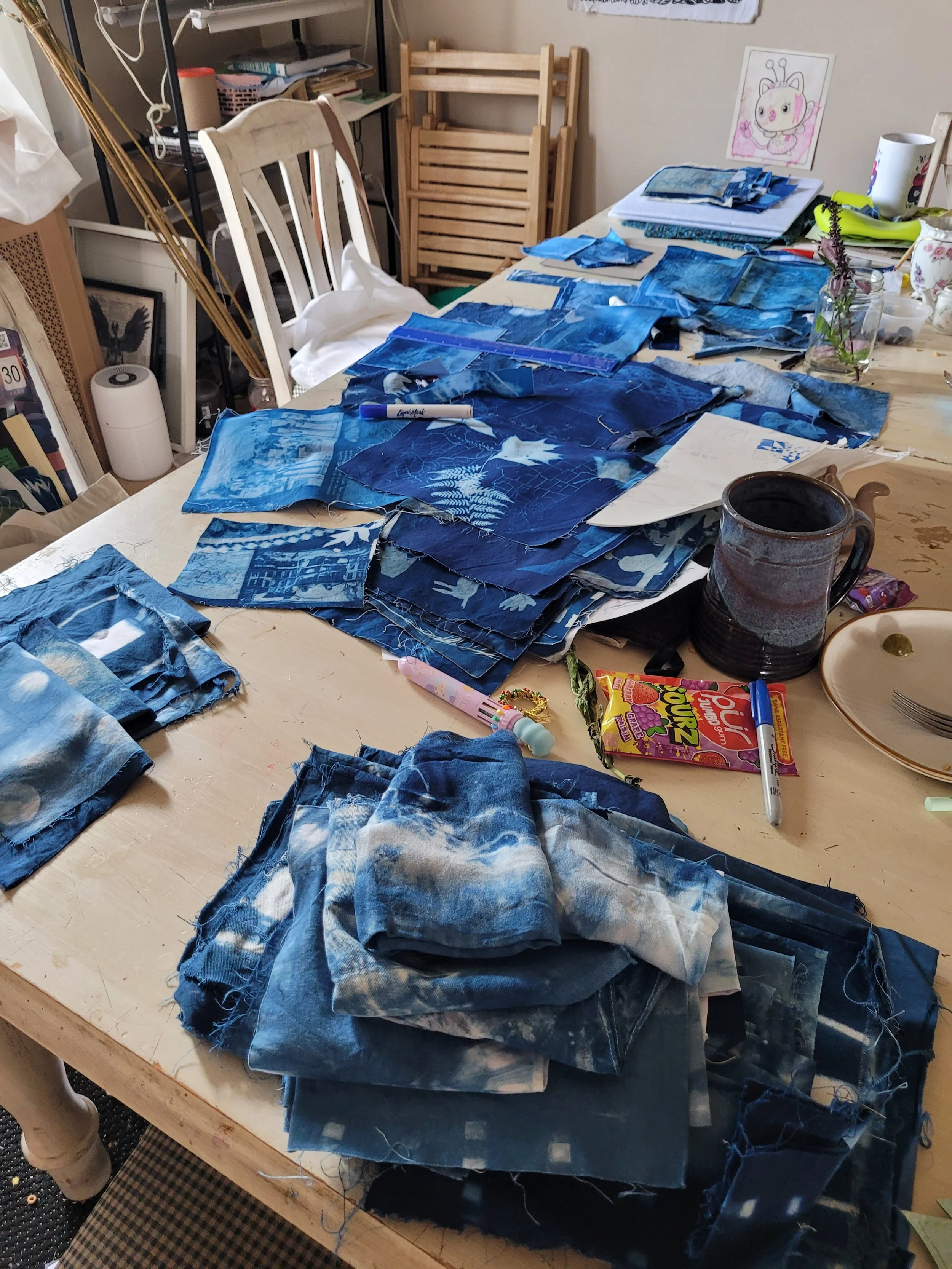
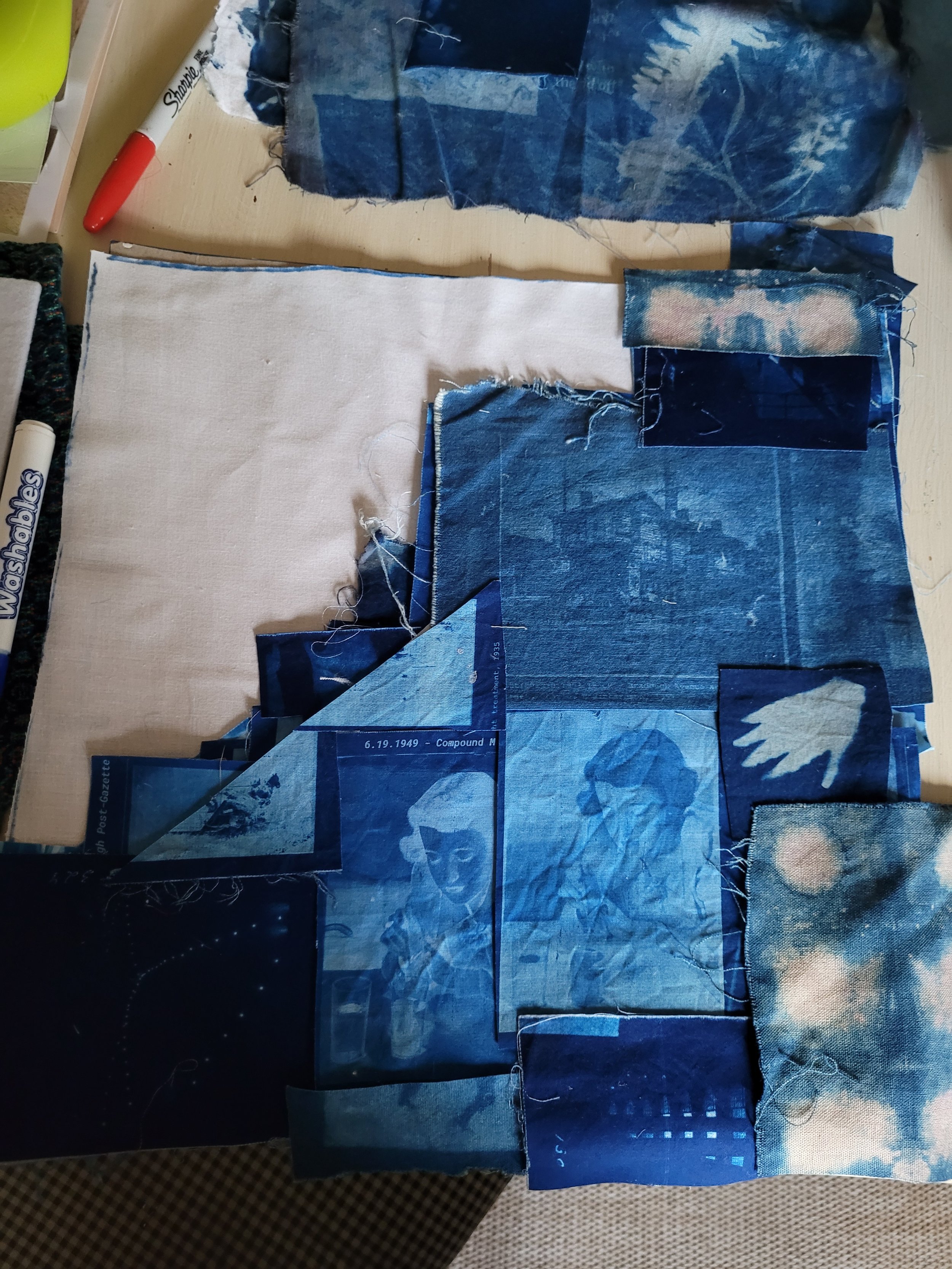
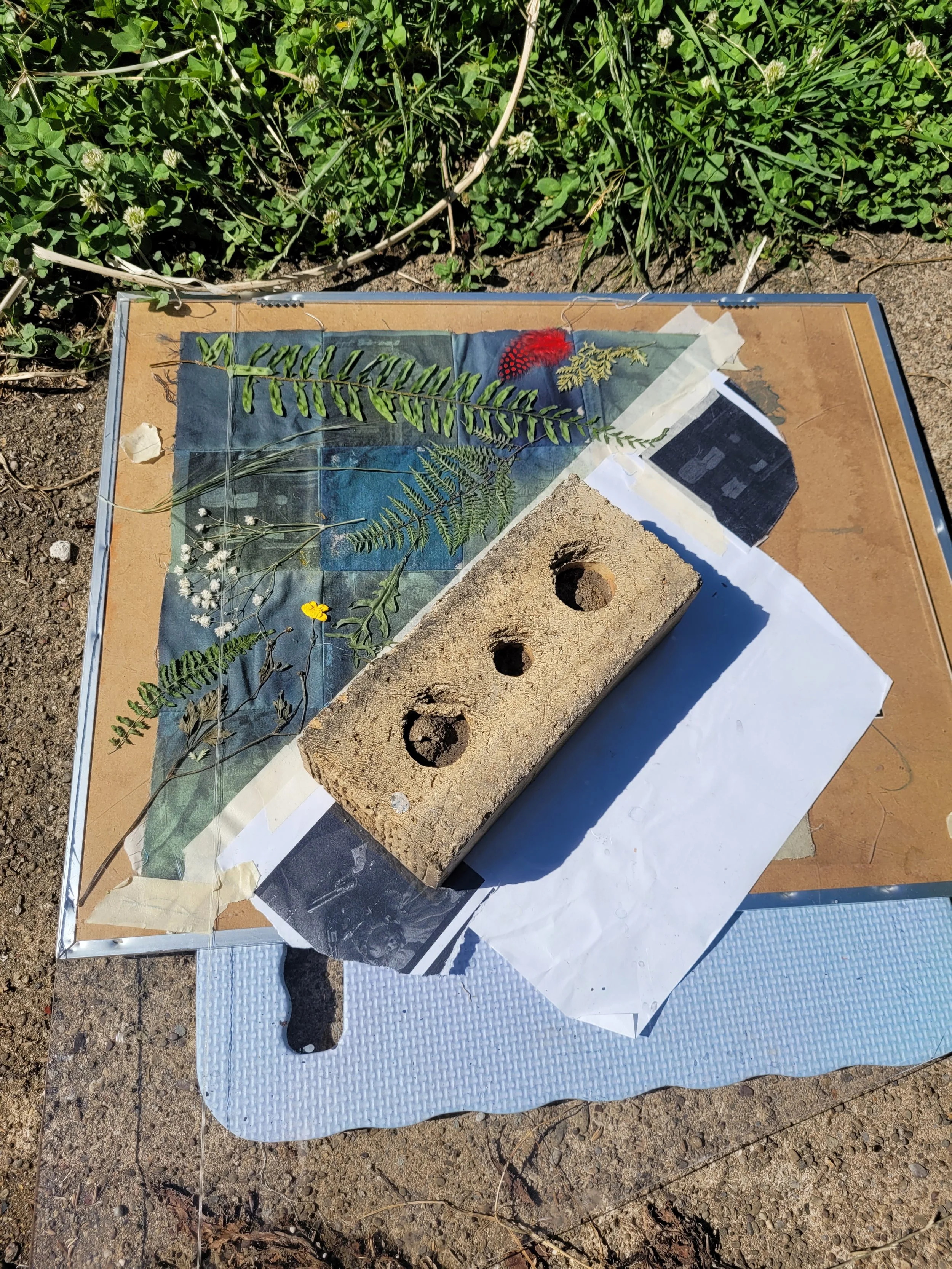
I created the images here by visiting the CLP Archives and making photocopies and digital scans of images from the collections. I was particularly drawn to images of children and families, environmental pollution and catastrophe, and river and waterway changes over time. I then turned those images into transparent negatives and printed them onto fabric using cyanotype, a historical photography method that develops images through sun exposure, and fixes them by submersion in water. I created hundreds of these photo prints over the course of my residency, each one unique based on the sun’s UV levels, length of time exposed to light, and other environmental conditions.
I included the library’s reference numbers for each of these unique images as part of the initial prints, although the process of cutting & assemblage I used to create the final quilt top destroyed, disassociated, or hid nearly all of them from view in the marginal seams.
I also created natural dyes from plants growing around me, and made an indigo dye bath to produce many of the resist-dyed pieces in this quilt. The process of indigo dying is totally different from cyanotype, involving different relationships to water, oxygen, and time, but the colors produced from both are extremely similar and congruous, and resemble each other.