Enabling Persistence:
Support for documenting projects of liberatory education on the land
Documenting case studies of autonomous, land-based alternative education projects and radical schools.
Creation of a chapbook / zine about the projects themselves and their history and origins
Support structures / resources / curricula for documenting and archiving these projects in a way that connects them with future emergent communities.
This project is currently in the discovery and research phase, funded through Float.ag from January through April 2026.
original project proposal
project background
project itenerary - jan-feb 2026
about:
proposal:
problem statement:
project statement:
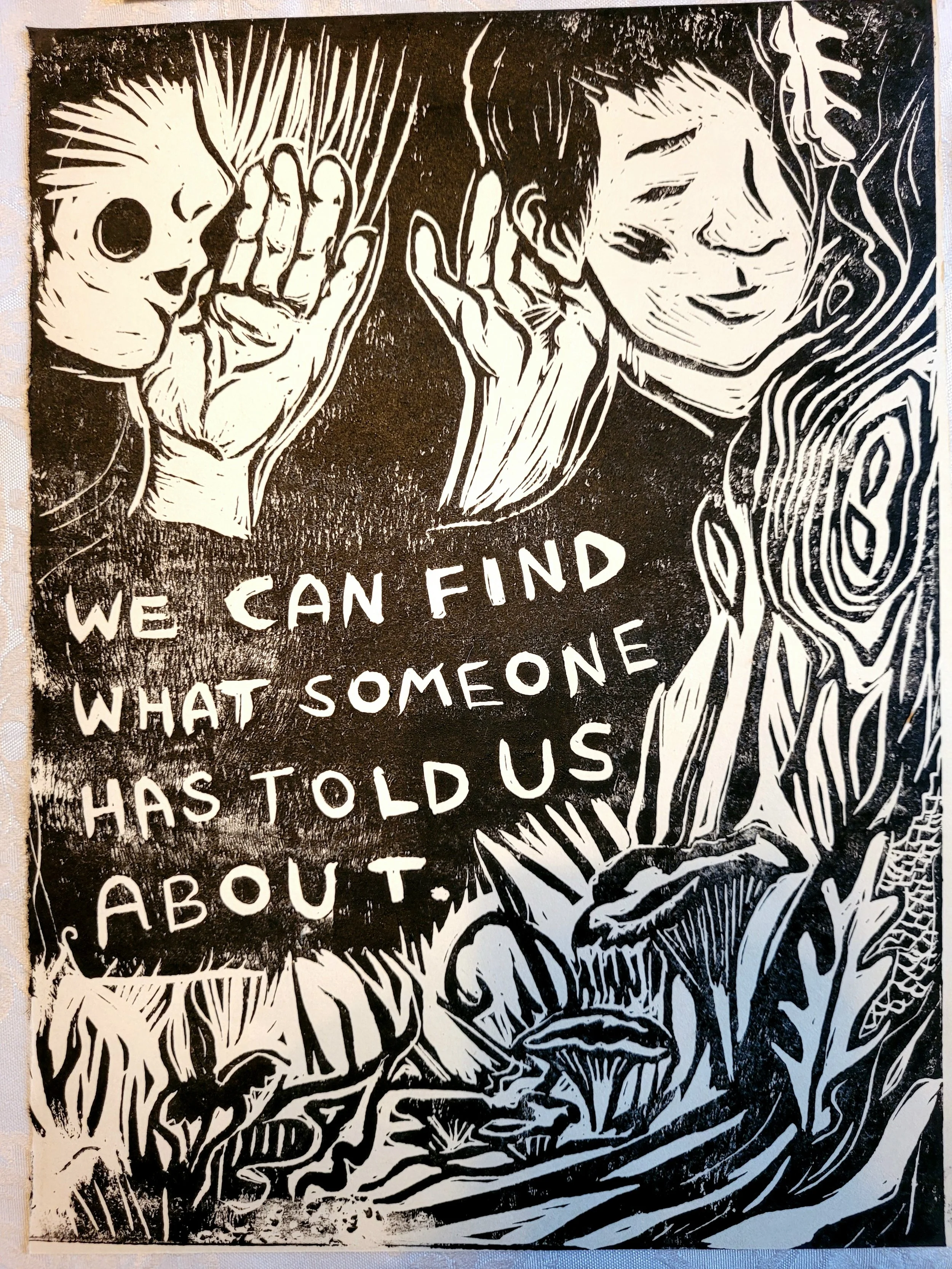
“A hundred years, a hundred more, we throw our weight against the door
And even if we don’t survive, we keep the little flame alive”
Documenting case studies of autonomous, land-based alternative education projects and radical schools. Creation of a summary chapbook or zine about the projects themselves and their history and origins, as well as support structures and resources for documenting and archiving these projects in a way that connects them with future emergent communities.
This project is currently in the discovery and research phase, funded through Float.ag from January through April 2026.
I'm interested in conducting in-person research to document land-based popular education projects & alternative schools in the Northeast & Southeast US in a way that connects those projects with the work of FLOAT. I have a hypothesis that many of the issues we are seeing with farm/land tenure transfer and digital record-keeping touch each other & are also present with these projects, and a documentation effort that works to archive & transmit their histories would also give us methods for solving multiple intertwined problems with land data, documentation,and knowledge transfer. I’m working with the concepts of grounded normativity and land-based pedagogy as described by Leanne Betasamosake Simpson, and with background on land-based North American utopian projects drawn heavily from work by Adrien Shirk. I’m also drawing from the methods & concepts developed in community with OpenTEAM over the past three years focused on accessible, ongoing, modular project documentation that supports process-sharing, attribution, and multiple modes of communication.
In our current moment of change and challenge, we see an urgent need to preserve the history, process, and collective knowledge from land-based collaborative education projects. This project seeks to prevent knowledge loss as historical alternative schools—such as one in Pittsburgh that ran for 15 years—are going through a process of generational turnover, often with little or no support to maintain and preserve their project knowledge. Many have closed and their curricula and history are becoming physically and digitally inaccessible. Projects that have worked to create physical archives are also at risk, as when my friends at School of the Alternative in Black Mountain, NC had their archive flooded in Hurricane Helene.
Ongoing project documentation is critical for continuity, but getting started and dedicating ongoing resources toward maintaining these records can be incredibly challenging. From my work with OpenTEAM & the Dweb & GOAT communities over the past four years, I know that accompaniment and scaffolded support can make this process doable, and that each successful example is valuable & supports taking the next step, contributes to community knowledge, and creates new possibilities for continuity that would otherwise be lost. Using the methods and community support we have within FLOAT - including examples such as collaborative project documentation through Gitlab, digital archival with the Internet Archive, applications of the FAIR principles, and a community of practice committed to reuse, recuperation, and reinvention – I would like to create a small, creative methodology for recording radical cooperation, in a way that carries & conserves these narrative histories throughout our network.
The proposed work involves visiting a small number of land-based alternative education projects to discuss their documentation needs; support them in writing, organizing, archiving, or distributing information about their projects roots and dreams; and contributing groundwork towards a catalog of networked projects across different regions. The primary goal is not to exhaustively document or create an independent archive, but to hear needs and obstacles, and establish a basic structure for documentation so that the history and curriculum could either be continued or archived by others. This documentation could be a resource for people running land-based projects to share their story, for the FLOAT community to build knowledge maps, and for local or digital projects seeking to match resources with experience.
I’m also interested in experimenting with ways of theoretically and practically connecting these communities to each other through descriptions of shared project ancestry, origins, or generation. To that end, I’d like to explore ways of connecting existing FLOAT projects for these other ideologically supportive communities I’m connected with, including the Institute for Social Ecology and networked artist residencies like The Sable Project and School of the Alternative.
I expect to produce a writeup that shares project research as three major outputs:
Detailed case studies of 1-3 projects with illustrations
‘Catalog’ entries from 5-15 additional projects communicating fundamental information or metadata about the project
Templatized resources for projects to use in documenting their work, for either archiving purposes or project evolution or continuation
These would be available both in the physical format of a manual, zine, or chapbook that could be photocopied, and digitally in a Gitlab repository or through the Internet Archive, held under a creative commons license.
“…the Zapatistas have learned that if you stop scratching at the crack, it closes back up. The wall heals itself.
That’s why you must keep at it, not only to deepen the crack, but above all, so that it doesn’t close.”
Project stages:
Literature review and research
Travel & Interviews
Documentation & Archiving
Mapping & network connection
Output - Chapbook and catalog / map resource