Cooperation Vermont / Marshfield Resilience Hub
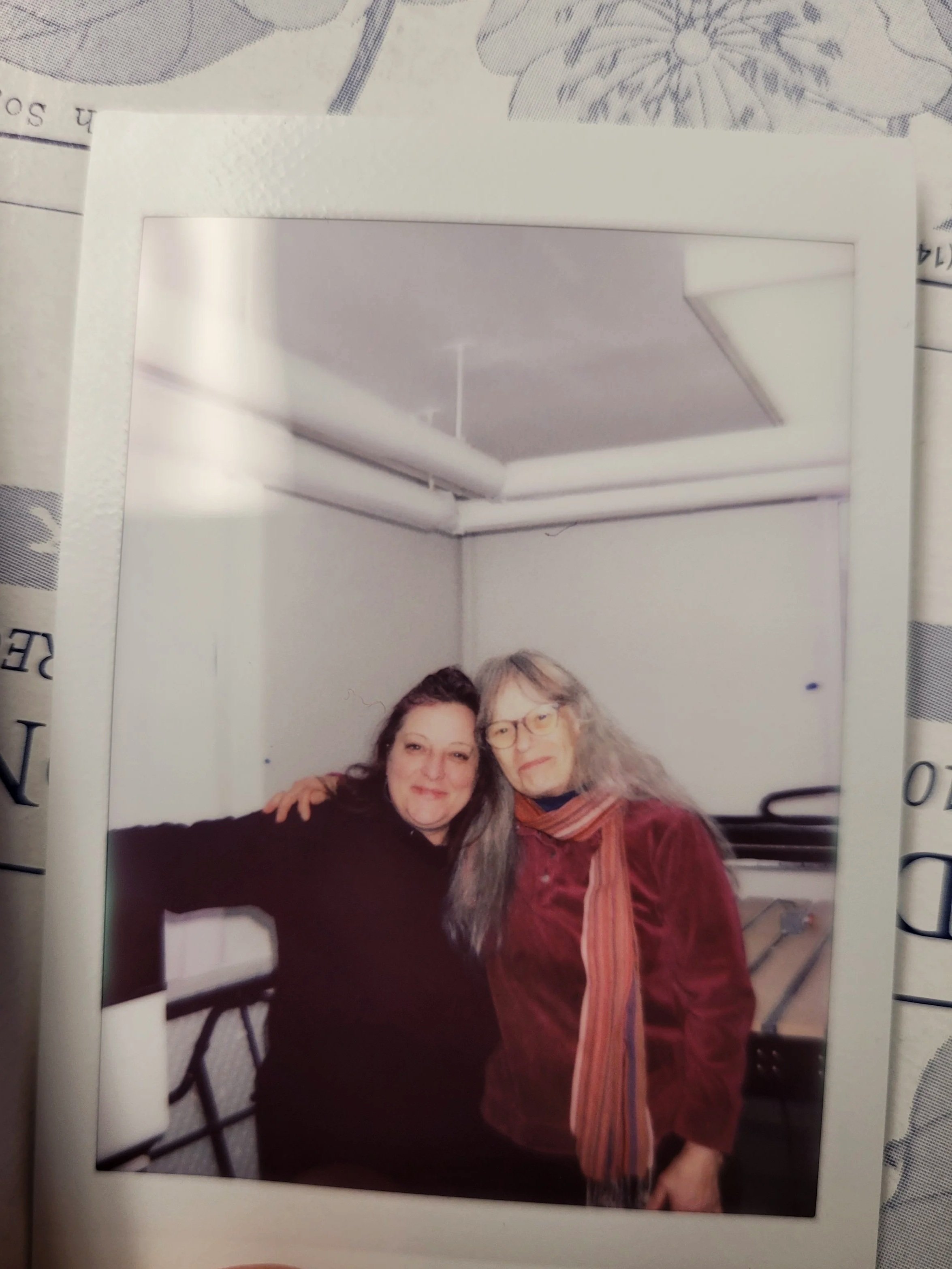
I’d been working with Grace for some time as part of the Institute for Social Ecology mentorship program, and had just had a winter cohort meeting two days before. We worked up a plan for Grace to drive down to Marshfield to introduce me to Michelle and talk about their work with Cooperation Vermont, as well as the many interconnected projects they’ve both been a part of for many years in this area. We met at the store, which is also Michelle's home, and had a lunch that sustained us for days.
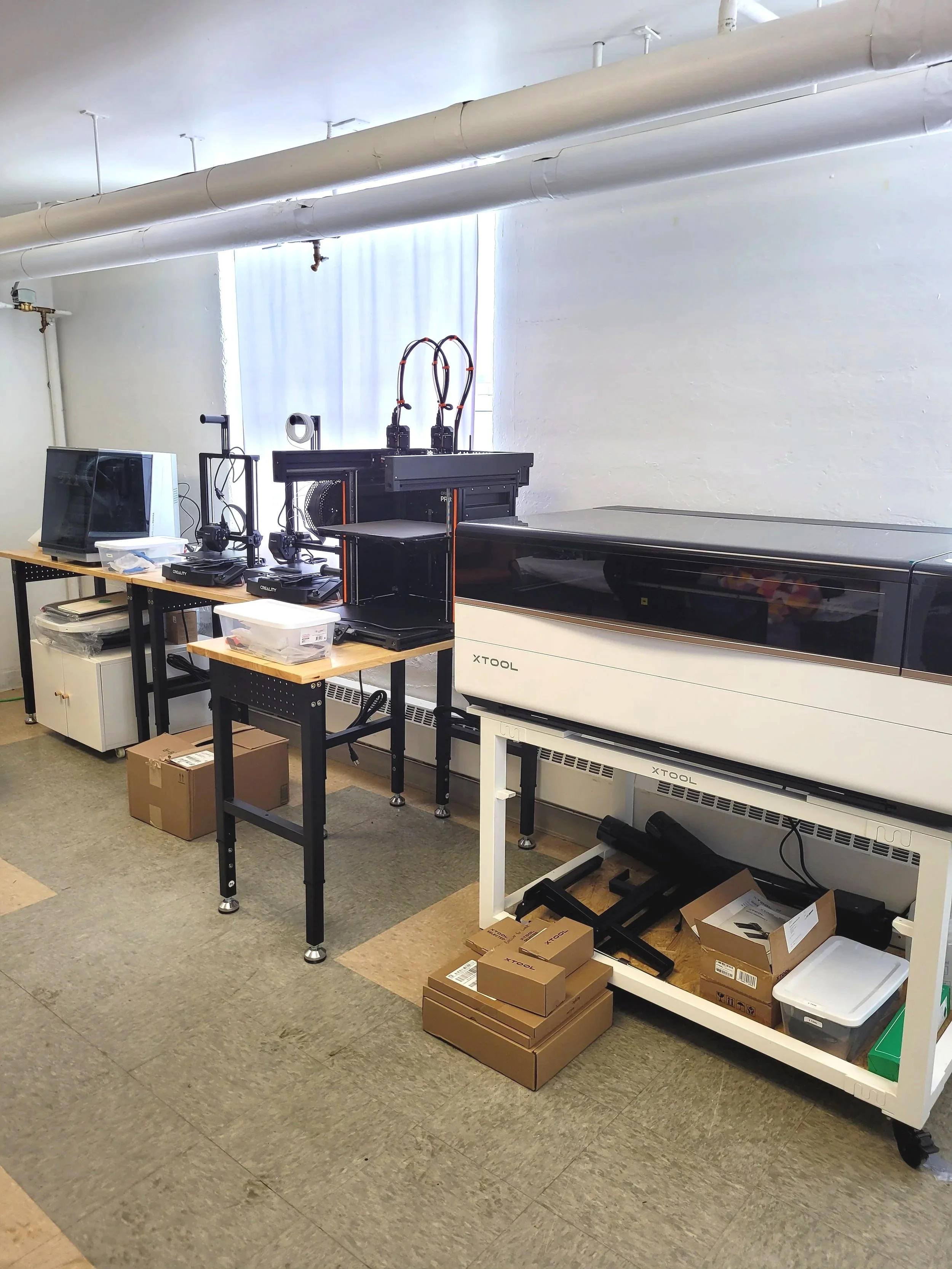
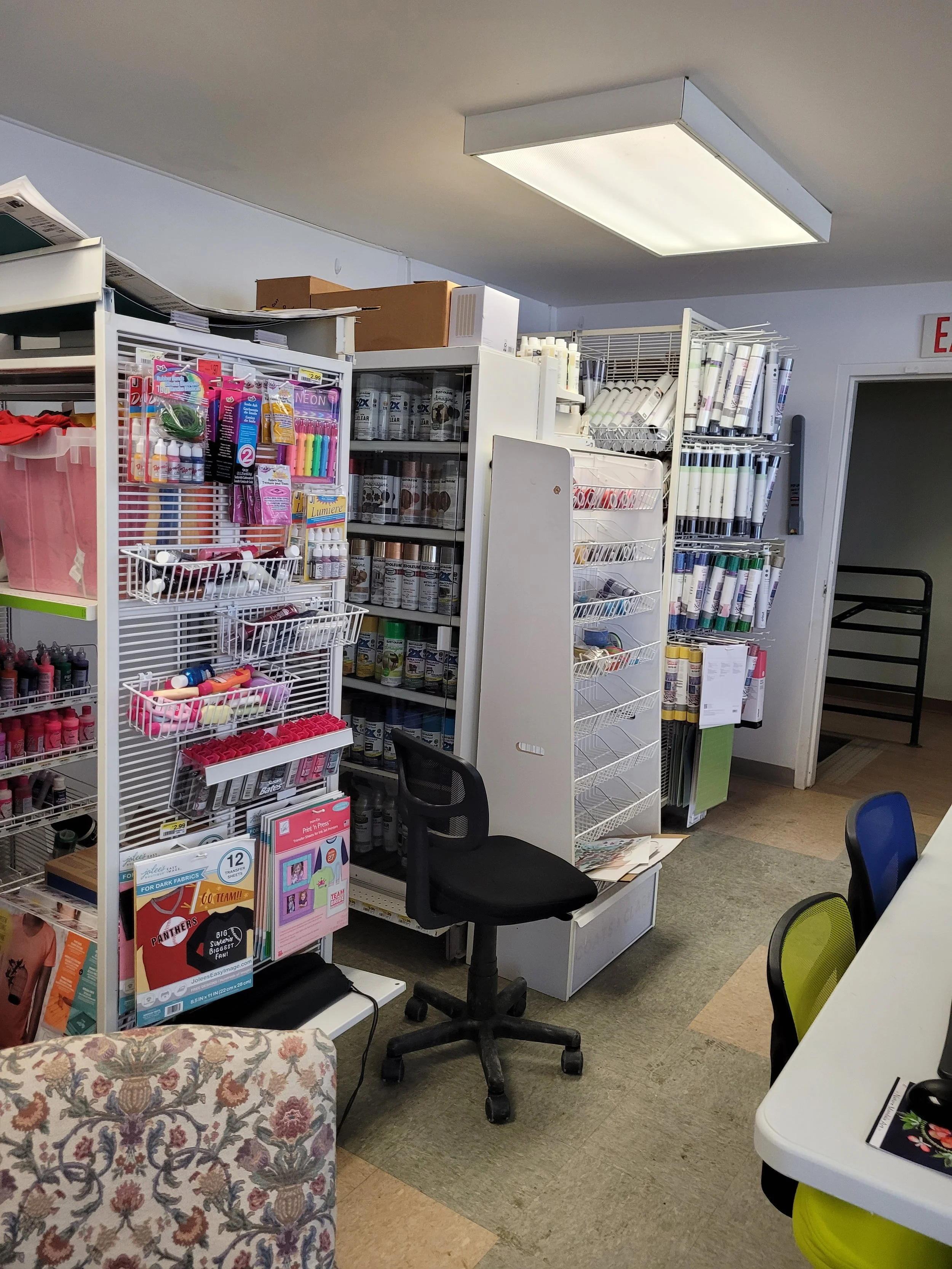
I didn’t record our conversation in the store, or the one we had while standing in the fresh snow outside the library. This interview takes place in the Fab Lab, part of the Marshfield Resilience Hub. It’s a clean, brightly-lit room with banks of computers in the center framed by neon-colored wheely chairs. The inside wall has a series of shelving displays loaded with paints, stencils, and vinyl rolls – recently acquired from the local Jo-Anns during their business liquidation. Underneath the windows are four or five big, oblique pieces of machinery. I ask Michelle to tell me about them.
This conversation has been lightly edited for length and clarity. You can find BALE online at https://www.balevt.org/.
For follow-up reading, see:
Michelle: I got the screen printing attachment for the X-tool where you can screen print, or you can laser engrave your screens, and it fits exactly into the inside of the bed, so you could do four or five layers of screens, and they would come out exactly the way that you align with your image.
[Sounds of amazement from Vic and Grace, laughter]
And then the X-Tool has full color printing for fabric, when it comes out powdered and everything, just an exact ink jet or laser color printing. And then you heat-press it on and keep it moving.
Vic: So what was the inspiration or jumping off point for making all this stuff in place?
M: We were talking about each of the nodes [of PNLL] that didn't have labs, because, Blair [Evans], he's got the granddaddy of labs, and CJ, Corporation Jackson has their lab. It's not what Blair's is, but they have a proper lab, and the rest of us did not. To bring each of us forward in that work, with Blair, being such an expert in the industry, we had the opportunity to create these starter labs.
E: It's really pretty.
M: It's really pretty? Yeah, the glitter ones. So cool. Do you need your chair back?
E: It's so rolly.
V: They're designed so you can roll from your station. Let me do this real quick.
M: There you go. Now I'm gonna scoot you. You want to get right in the middle? There you go. Okay, but now you're gonna have to be very careful about not just jumping out.
V: Okay, ready to go.
M: So that was what we had been planning. And so I went and I picked the space here, because it would integrate right into the heart of the community, and with our Marshfield Resilience Hub that we've been working on organizing-- that's amazing.
So we got this space. And that's when I was like, let me just go see what's going on here. Because this was empty, completely empty.
V: So this is very recently that you were building this space?
M: Yeah, so that all happened at that time. We were running some art programs and sewing classes, and open studio kind of stuff on Wednesdays, when we have our town's community supper– that happens every Wednesday. So we were doing open studio, but then we had to kind of shut that down for a bit-- this whole room was full of boxes for a minute, and it's still got boxes of things we need to figure out what to do with, because we're about to start boot camp and actually get the space finished, functionally organized. There's a bunch of grunt work that's got to get done now too. So that's my cue.
We've got a lot of work to do so we can get ready for the boot camp. We're still waiting for our filament and a bunch of other things for our components for building electronics.
V: Yeah, what sort of things are you envisioning to produce?
M: It's always a question, especially with the way that 3D printing has gone for mass markets. People are buying or making absolutely useless nonsense.
V: Oh, an articulated octopus with a Shrek head is nonsense? [laughter]
M: Yeah. Because what the world needed was another plastic dragon. So, not that, right? Not that. We’re trying to focus on things that the community actually needs.What does movement need? And that goes back to our philosophy around worker cooperatives as well. You can have a coffee table of tech bros that get together and are like, ‘oh, we're going to make a worker cooperative–’
V: Heaven forfend.
M: Right? So, yeah, you're a worker-owned cooperative. Yay you. Not hating on it. But our focus is really on developing cooperatives that are meeting the needs of both the local community and the movement.
Troy: In Pennsylvania, there's Tech Owl PA. And they specifically do 3D printed stuff for access needs or assistive technology, and people present a problem to them that they have because of a disability. Like, something like tying your shoe, or or putting your shoe on. And then they get together and brainstorm a device that we can 3D print that helps with this. And then they have this library of all these things that they've developed for people.
M: Do they open source the files?
T: Yeah, almost certainly.
M: One of the very first things that somebody came to us with when they heard we were getting this equipment, was the need and want to build a wheelchair of sorts for their dog who had lost the mobility of their hind legs. One of the first things, in terms of the electronics that we're looking at, is our mutual aid organizing project– It’s not just Cooperation Vermont; it's a bunch of folks within the community, pulling together what existed, strengthening what was there, and then filling in with what didn't exist and growing in terms of our local resilience. We have the Marshfield Resilience Hub, and we've got our community garden, and it's expanding to this food forestry project that's happening on our town lands, and we have a farmer's market now.
G: It’s a really awesome farmers market.
M: Yeah, it's so sweet. We have music, and it's free for the vendors, but it also has a skill share and a swap of some kind, and our skill shares go through the winter as well. It could be anything from cold canning, to Stop the Bleed training, to sharpening a chainsaw, to mending knits.
V: I want to go to all of those.
M: Me too. We've got this amazing winter wellness herbalism shop that's happening on Saturday that I don't think I'm going to go to because I got an organizing meeting in Montpelier. You should go. Sasha's doing it.
G: Well, I love our local library, which is really great also, they're doing a seed swap on Saturday, and one of the local farmers who's an herbalist organizes it.
M: So the swaps also happen through the winter, and the swaps could be anything from tools to back to school stuff, to winter wear, coats and hats and gloves in particular, that get swapped around our community, big time. And then we have our tool lending library, which is right off of the back here in the shed.
M: For our tool lending library, the circulation is actually managed by the library now. And the library is a partner with the Resilience Hub, and is one of the anchors for it. I'm a trustee with the library, so I'm able to coordinate that.
V: Did that start separate from the library and then was folded into it?
M: No, we developed the Marshfield Resilience Hub, and as the Resilience Hub, decided that one of the first things that we wanted to do was develop this tool lending library.
V: That makes sense.
M: And next to that, we have a shed and a solar fridge that we're going to be installing after the thaw.
G: That's through Living Energy Farms.
M: Living Energy Farms, yeah. And it'll be a community covered pantry. We also have our food shelf that is connected to the Vermont Food Bank, that is its own project that has been around for years and years, but with their current capacity only had hours between, like, nine and one or two on Wednesdays, which is a very difficult load for people who work. So with the Resilience Hub, we were able to expand the hours to Saturdays also with that connection and that support. And then our garden is growing food so that there's fresh produce as well as what folks were able to get otherwise.
G: And who's doing the growing? Is that volunteer?
M: We have a garden coordinator that's super part-time through the season. And volunteers. People, anybody in the community can come and grow, and it's just there and people can come and take food whenever they want also. Our garden club that's part of the Resilience Hub is doing Grow an Extra Row as well. And they're also meeting to talk about doing some seed saving and swapping, and then meeting to talk about what folks are seeing in terms of climate change and adaptation and what's working, what's not. This new pest, those floods, that drought. Because that's our new cycle. We just rotate between ravaging floods, to droughts, to floods, to droughts. This should be a flood year.
V: This is what we're seeing-- I grew up in Tennessee, like East Tennessee, Western North Carolina, another area that was written up by national magazines as where you escape to in the disaster, like, ‘this is a zone where you will be able to retreat to’, which means all the property values go up really high. And then all the people who live there get burned out in the wildfires and then drowned out in the flood.
M: It checks out. So there's absolutely no corner of this planet that's going to be without effect. Right.
V: So you said you moved after COVID. How did you get to Marshfield?
M: We had kind of scoped out Vermont and then made connections. Kali was long ago an organizer with the Malcolm X Grassroots Movement, and there was an elder in that movement who has been coming back and forth to Vermont. His father was a political prisoner, and was connected to somebody else whose father is a political prisoner here in Vermont through a network of children of political prisoners. Russell Maroon Schoatz, who died after compassionate release, shortly after his release. But his son, Russell Maroon Schoatz III, and Netdahe Stoddard grew up here.
M: So that's how we first started coming up, and it was a bunch of back and forth for me as well. And it wasn't until, I think, April of 2021, that I was like, 'Okay, we're doing this'.
After spring into summer, by fall, I was like, 'Maybe someday, but not now.' The calculus that we had made to start a thing still remains, that didn't change. My oldest son was in Barbados in school, and my youngest was here with me. He was just starting high school, and I didn't want to move him from South Florida to a rural Vermont high school his first year. In addition to obviously being very cold, it's also extremely white. It's the whitest place that I have ever lived, and I've lived in Moscow. [laughter]. And that has its challenges.
: So it was just me and the little one at that point. He was just starting second grade, and he went to school at Twinfield, and we were living in this little, tiny cabin with an outhouse and a woodstove.
G: And a bidet.
M: And a bidet! Yeah, I had a bidet put in, that I think came from Crystal.
G: No, it came from me! [Laughter]
V: See, these are the sort of invisible connections I find really beautiful.
M: That honestly was make-or-break that winter, because my whole project was like, 'don't die'. Just don't die. I've got my almost eight year old living in this cabin, trying to figure out what we were going to do next. And I was driving my son back and forth to the store to pick up the bus so he would still have the socializing time of being on the bus coming up that hill. And there was a For Sale By Owner sign in the window. And I was like, Huh. So I got thinking. And then I started thinking and talking, and thinking out loud, talking to other people, and then slowly--actually, quite rapidly-- started building a case in my mind. And then I was like, this could be luck.
And then we had some visitors who came through, and at the end of the day, they decided to give us the money. Because I was just casually talking to this person about this random-ass idea I have, and why I thought it made sense, and what the opportunities would be. And this person ended up giving us the money to buy the store and the building, because it was being sold as one. So we bought the building and the business, and we created the Cooperation Vermont Community Land Trust. And at first it was in the name of Cooperation Jackson, they held it for us until we could create and actually establish the Cooperation Vermont Community Land Trust that Grace and I started working on.
And that became its own process, and now the building is in the land trust, as is the Rainbow Suites building that, depending on which way you came--Did you come on the road, or the dirt road?
V: Uh, hard to tell. [laughter]. They're snowy!
M: Did you go straight and this way? Or did you go down a windy back road?
V: I think we came the dirt road.
M: You came the dirt road? Okay. So, go out School Street to US-2. And right there on the corner, there's like a bluish, purple trim sort of building going on. It was Rainbow Suites.
G: Just a little bit of background on the community land trust thing. Because I had had this idea of wanting to put my land into a community land trust, and I had written a concept paper and was talking to White River Land Collaborative about them housing it. I had met with Susan Witt at the Schumacher Center who advised me on a whole bunch of things. And then the Ecosocialism From Below conference was here.
M: It was Cooperation Jackson, ISE [Institute for Social Ecology], and Cooperation Vermont helped to host.
V: What year was that?
M: That was 2022. We had just bought the store.
G: 2022. And so that's when I first met you and all of the cast of characters, David Cobb, and all.
M: That was my first time meeting Jonathon Freeman too, who became part of NRN [Native Roots Network]. Well, they were already in NRN, but it was before NRN came into PNLL [People’s Network for Land and Liberation].
G: So, yeah, it was a pretty seminal moment. The White River Collaborative, Fran Miller and others whom I had been talking to, said ‘ We think it's a great idea, but it's just too much for us to take on right now and it's kind of far away.’ And so I thought, oh, what the hell. I floated it, I just gave out copies of my concept paper to everybody who I thought might be interested. I had David Cobb, calling me up and saying, you've got to give this to Cooperation Vermont! [laughter]
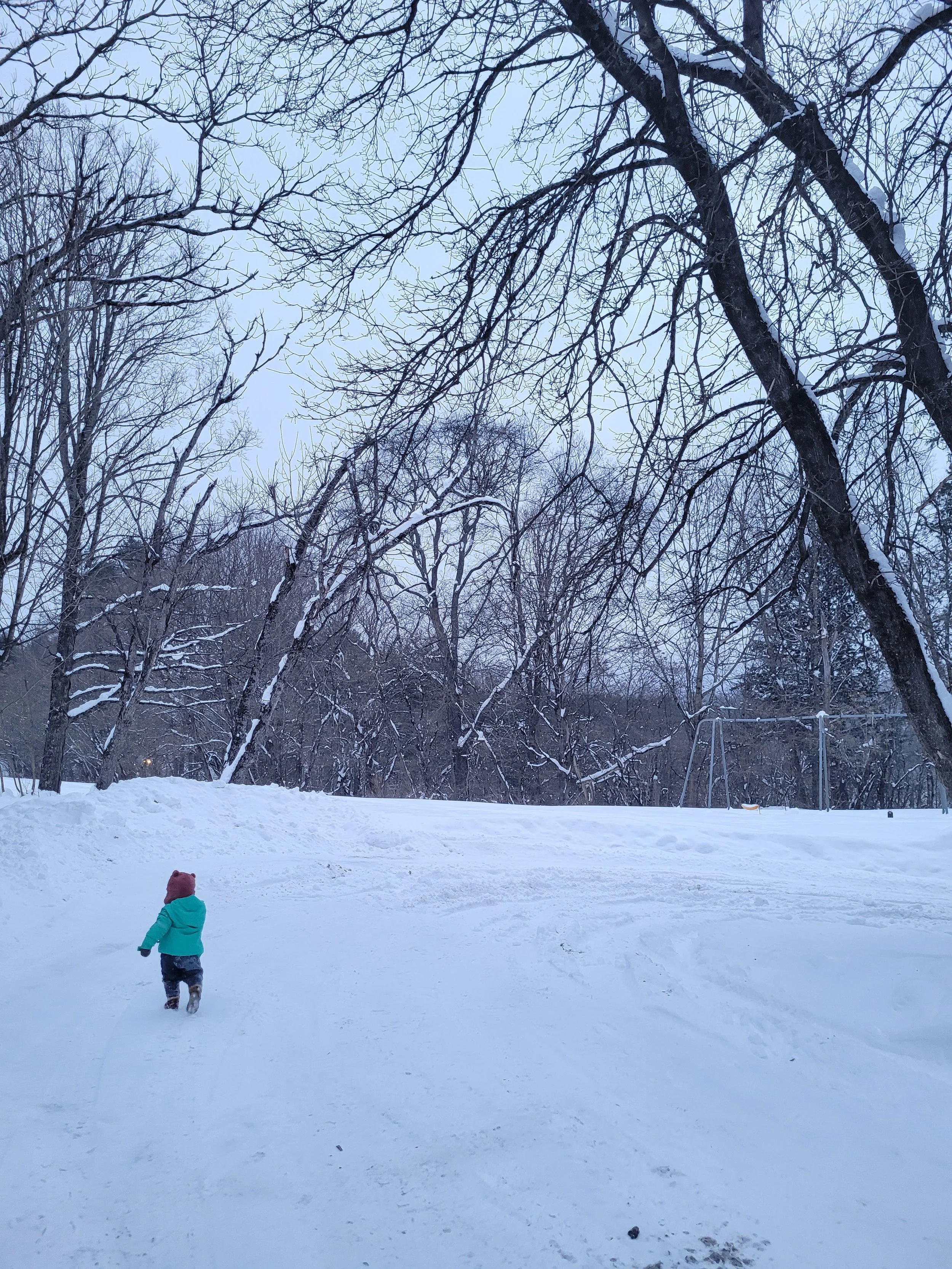
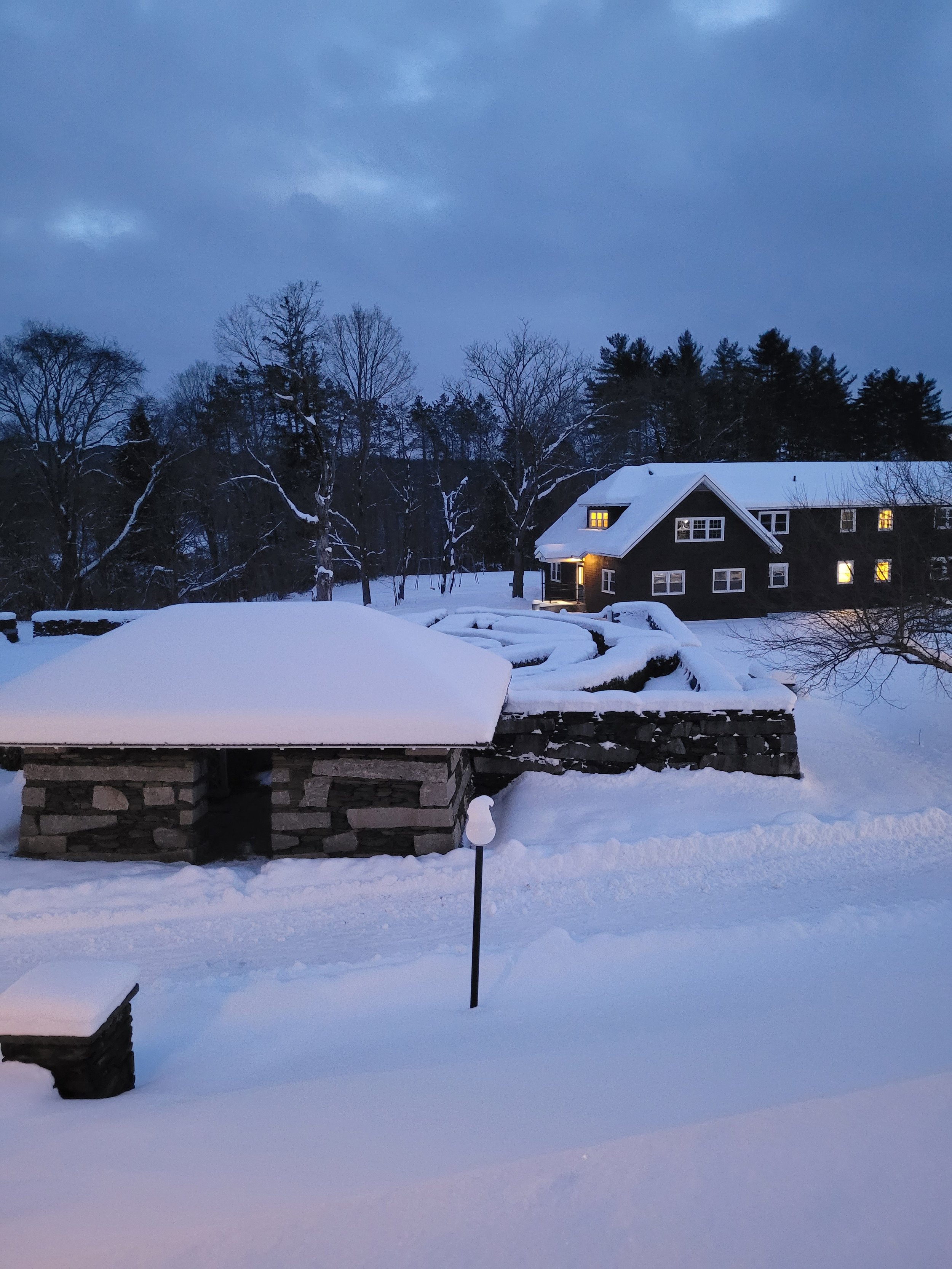
M: It was a year and a half of us having the store when the first flood in July of 2023 hit us, and every single one of our roads was damaged. Every single one of our bridges washed out. The village was-- our water and sewage system sits at the top of a road, and the entire road turned into a river. It just completely crashed down into US-2 and an entire road's worth of road material ended up in the middle of US-2 as cars were trying to pass. And then the rest of it, the houses on the other side, then it just straight up floods over on the other side. And this building, you have to cross one of two bridges to get to it. So you're not getting to it. And then our school, which is about seven minutes out, is also supposed to be a shelter, but also you have to cross a bridge to get to it. So the reality is that we ended up becoming the shelter of last resort for some of our neighbors right in the village, but also for people who just got trapped here when the roads partially collapsed and washed out.
We had roughly three dozen people here overnight, babies, a woman in a wheelchair, who had to get carried upstairs. And so we've been preparing the store and rebuilding the third floor to be much more deliberate about that into the future. We've got a generator that's towable now-- it's my favorite. People go into hurricane and flood preparedness with getting these generators and they think that putting it up on, like, a few inches of cement is going to help. No, it doesn't actually. Not even a little bit. Having seen the devastation of fourteen feet of water, I think differently about things. We got a towable generator that lives across the street and up the hill that we bring down if we need to. We ended up being the relief hub for the community as well. That night we sheltered a bunch of people. And by one o'clock the next day, we had a barbecue in the parking lot and fed a couple hundred people. And then by that evening, I had 800 gallons of fresh water in IBC totes sitting at first on a hay trailer, which is suboptimal, not meant for that much weight. So then one of our construction guys brought one of the big-ass flatbed trucks, and we put it up there. We were the town's water supply for almost two weeks. And we got a couple of drops of bottled water from the National Guard, but they actually couldn't unload them. So I had to get one of my neighbors from up the hill to bring his tractor with forks down so they could unload it.
G: That was Asa, right?
M: That was old George who lives over by Tom. I mean, Asa would have, but George is closer. And then we were, you know, mucking and gutting houses, and doing mold remediation. We were collecting food from farmers and folks. And then the people that organized community suppers would come to the store and pick up the food and they would make meals and bring it back. And then our crews were delivering meals to families as they're working on their homes and have electricity. Or if they actually can't get out, we were delivering meals with ATVs and one-wheels. You know those skateboard-looking things with big giant fat tires? Yeah. Tom, that's his nickname around town, is one-wheel. [laughter].
Anyway, it was doing a bunch of stuff. We had a distribution center with Roger, one elder that was at the store, and Ms. Charlie, our neighbors right across the street on that little road. They came and wanted to help and volunteer, and basically staffed our distribution center, and helped people like it was a store. Charlie's really good in particular about talking to people and actually finding out what was going on, because Vermonters pride themselves on resilience– like, 'Oh, I got this.' And oftentimes they do! Between them and their immediate neighbors. But this was big. This was big, and it was fucking exhausting and you've still got to go to work. Yeah, you might have four feet of mud in your basement, but you still have to put food on the table next week. So what do you do? People got exhausted quick, and they actually did need help. Having neighbors, people that they know, to find out what was really going on makes a difference. Because if FEMA comes knocking, they will literally tell FEMA to go f*** themselves. And they're also not wrong.
V: Yeah. I mean, that was what it was like in Western North Carolina too.
M: Yeah. I even cussed out FEMA when they finally got here. I was like, you and your fucking khakis. It was a whole thing. That was also really quick, because we'd only been there for a year. And we kept the store as the community store. We didn't come in, we didn't try--there was a lot of confusion and concern, because we do have really nice food cooperatives in Vermont. Plainfield Cooperative has been around for over 50 years, and they spawned Montpelier, a Whole Foods sized food cooperative. The Adamant Food Co-op is one of the oldest worker-owned grocers in the country.
G: I didn't know that.
M: Yeah. The place has a long, long history of doing solidarity economics work before that was the phrase. But those are member cooperatives. So first explaining to people the difference between a member cooperative and a worker-run cooperative, and that it wasn't going to suddenly become, while very nice food, very expensive food. Cause I've run those experiments. Like, what does it take to actually go grocery shopping [at a co-op]? [Laughter] Yeah. Like, holy shit.
V: I'm sorry. What about applesauce, my friend? You want me to take a picture of this applesauce? You got it, babe. Where did it come from? Oh, that's good. Is it? Okay. I got it. Now you can eat it.
E: Vic, what are you doing?
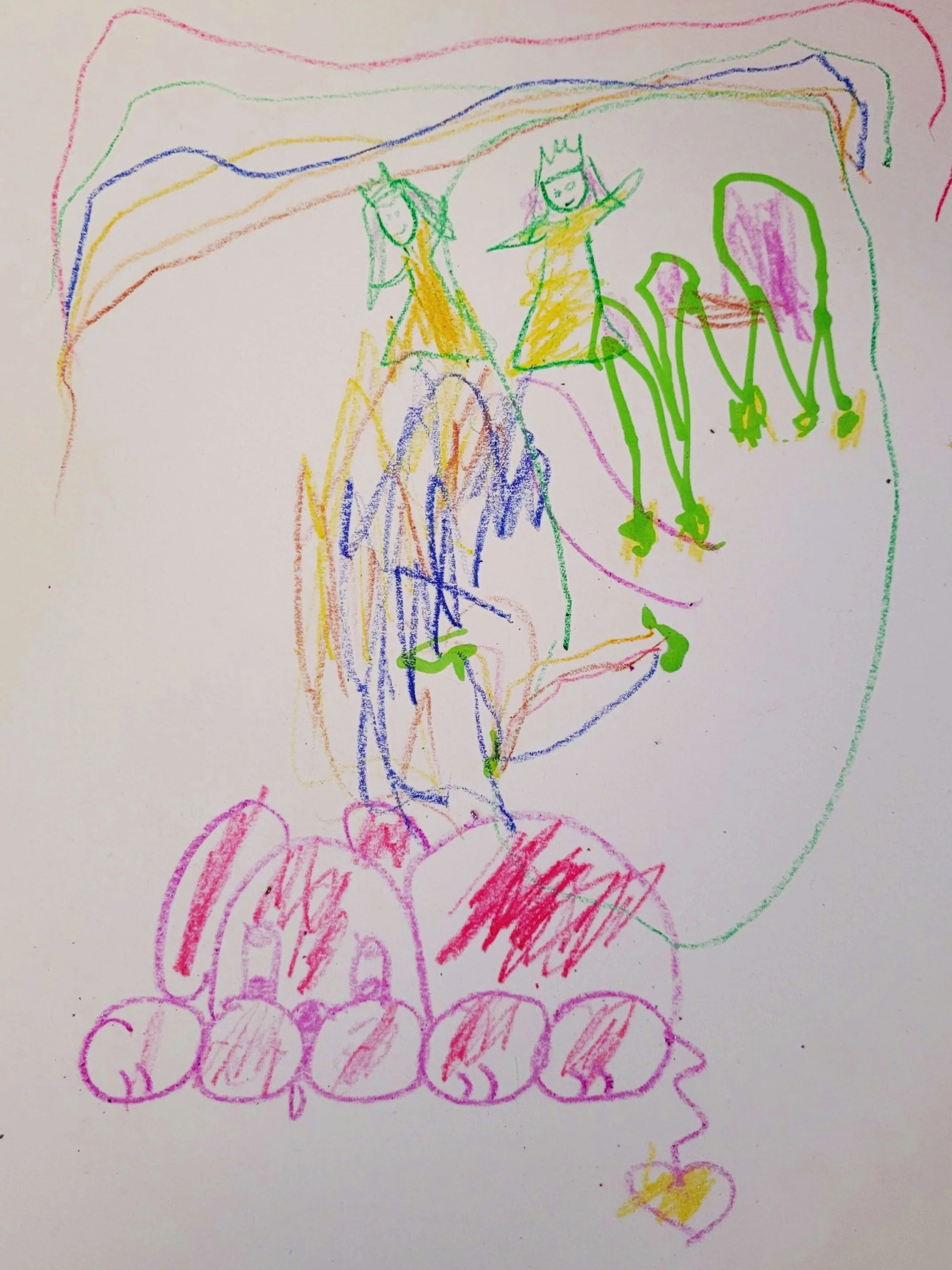
V: Oh yeah, I haven't been drawing another princess, ok.
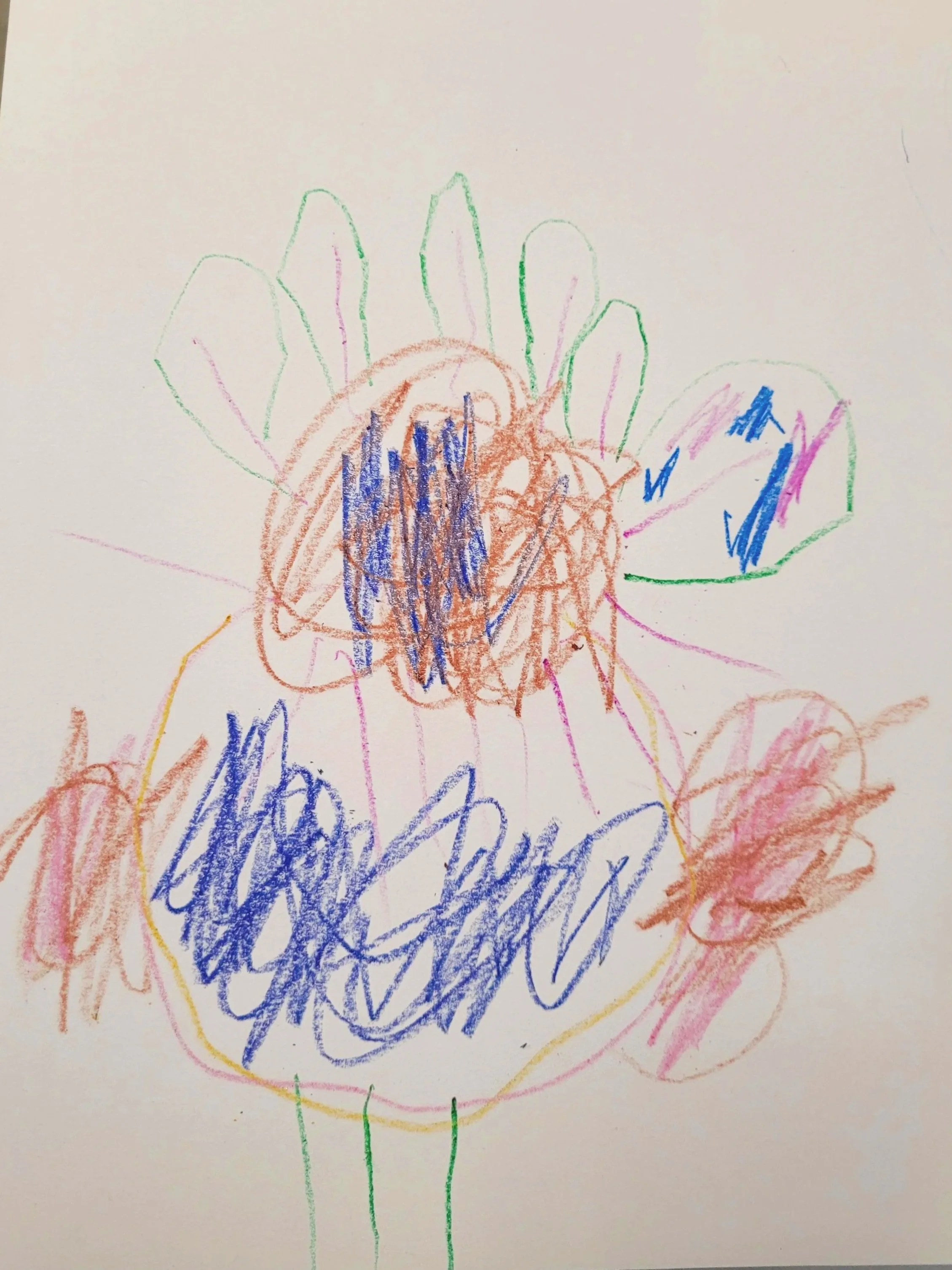
E: It's a monster.
M: Oh, I was gonna say it doesn't look like a monster.
E: It looks beautiful. I made this.
M: You know what it reminds me of? Not to say that that's what this is, but you know what it reminds me of? It reminds me of a peacock that got sprinkled with fairy dust.
E: [Laughing] I never thought of that!
M: Oh, yeah, that's what inspires my mind when I look at this, is like that reminds me of a peacock that got sprinkled with fairy dust.
E: I never thought of that!
[laughter]
M: That's what inspires my mind when I look at this.
G: Yes indeed. I can see the tail feathers.
T: Is that what you think it looks like, Elinor?
E: No, thank you. I just drawed.
E: I want to paint now.
V: You want to paint? That might be for another time.
M: You know what I do have? I got one better for you.
G: Paint pens.
V: Elinor is passionate about crafting. Like, most of her day, she's working very hard at her craft table.
E: I thinked my name was 'Nora' for a long time, when I was four. And now I finally changed my name back to Elinor.
E: Can you draw a princess standing on this?
V: Well, I can try. How big is the princess?
E: Um, this big.
V: Little? Do you need a crown?
M: I don't know if we have anything for Micah.
V: [Laughing] Yeah, Do you have like some recycling trash? That's what Micah likes best.
M: I had this instinct. Micah. Micah, look.
T: What? Is that like a drum?
M: Hey, honey.
V: Yeah, baby, I love it. She was like, those look like blocks. Yeah, I'm interested.
E: [incomprehensible]
V: Oh, I thought you were Micah. Do you want to get holded?
E: Vic? I was pretending to be Micah.
V: Or I could also use your help taking pictures of the lab here if you're ready for that job.
E: No, how did you think I was Micah? I wasn't expecting that.
V: Well, you did a great Micah impression, is how.
E: I colored the princess here, this color, and I did it inside the lines! .
M: Oh, beautiful!
V: You did.
E: I want the princess to go in the trap.
V: Okay, you can do that.
E: But I don't know how!
V: Here's the movement line. It goes whoosh, whoosh.
E: I don't know how.
V: Will you take some pictures for me, my friend, of all the beautiful things in here? Can you take some pictures so we have them for our record?
M: That'd be awesome.
V: Or I can. But I really want to hear Michelle's stories while we're here together.
V: I think Elinor had a question.
E: I'm a big kid now, and I never, ever stayed in the lines before.
M: You never stayed in the lines before?
V: And that's the first time you did, with these crayons. Hey, celebrate you.
M: Can I draw a dog that I learned how to draw when I was, like, a little bit older than you? And then you can color it?
E: Yeah, you can do it on my paper over here. I actually want the princess to have a dog.
M: So I'm going to draw the outline of a dog… and then the ears, and then this is the little face.
E: I think this is a magical dog.
E: Tell me why you take hours, baba.
V: You said you were on the bus with Micah?
E: Does anyone want to come with me?
V: A few more minutes and I will come.
M: Yes. And so from that journey, the whole structure for the land trust was created. And the creation of the Elder Land Share project, which is a project starting with Grace's property where the land itself is coming into the land trust and ownership of buildings, the home and two buildings will be retained by, in this case, Grace. And building an additional unit on the property that's going to be more aging-friendly, age-in-place friendly. The idea is to usher in a new generation of land stewards that can simultaneously learn about working the land and being integrated into that particular community, and also provide a community level of care. And I don't think any two situations are going to look exactly the same. Other people already have spaces where it could be a ready conversion or there already exists additional living space. But the idea is to to decommodify the land and keep it off the speculative market.
Between Goddard College and the Institute for Social Ecology in particular, this-- like, why Marshfield, right? This particular area is heavily influenced by that. Culturally, politically and generationally, now, there's a lot of folks who came here in the sixties and seventies in the back to land movement. Vermont was also seen as a respite spot politically. And a lot of folks did not have kids because, you know, nuclear war was imminent, and so they're here, but they came here with a particular relationship to land and a politic. With the realities of life, they ended up in private property. But they still hold that relationship and that politic, and are now looking for what to do next. And it is very difficult anywhere, but particularly in rural environments, particularly with such harsh winters, for folks to age in place, and they really, really want to be able to. So this is a way to help bridge needs from a bunch of different directions. Because land access-- and housing too, but land access is one of the critical points where you have, you know, folks who do have skills, but the access to land that is privately held and on the speculative market is so unbelievably unaffordable, that the ag lands are increasingly, here and everywhere, being gobbled up by larger and larger operations. And were becoming dormant, if you will, where some asshole from Boston comes up and buys their third home to come and hang out here for a month and they might maybe lease some acres for hay fields.
V: We were in upstate New York for COVID and we were-- neo-feudalism is what we were calling it.
M: Yeah. And what we're combating is techno-feudalism. There's a good book on that, by the way. And Designing Reality is another important book. So that's the Elder Land Share project, and Grace is coming on with the land trust this year to really move that piece forward. That’s the larger picture of 'why Marshfield'. Since then we put the buildings into the land trust, the Marshall Road store was starting, and we converted the business to a worker-owned cooperative and have used it as the community hub that it always has been. But it's also given us a rapid-fire way to get deeply integrated into the community from every direction and with a really broad range of the community as well. Because we didn't come in and--
G: Because of the flood.
M: The flooding, as well. It was, like, never let a good opportunity or a good crisis go to waste.
V: Paradise built in hell, yeah.
M: It was always in my purview that, whether it was a climate or political disaster, that the store was strategic from that perspective as well. Because of both mine and Kali's history with mutual aid and disaster response work, and all the things, we always had it in our mind that that would be our role. What we did not anticipate was that it would be so soon.
G: You got your chance!
M: So, you know, you can still come to the store and you can still get your beer, get chips, you know, and then we were working in more and more things that are very, very locally produced. Like the whole section of the store where we were sitting is all super local and Vermont based, and then it's threaded throughout the store as well.
G: And then, you know, and then all of these allied sorts of institutions like the Center for an Ag Economy--
V: Okay. I've got them on my list, but I haven't connected with them yet.
M: We're not on their distribution route still. Not yet.`
V: I feel like I'm well positioned to go and make that case now.
G: And there's the community radio station. So many, so many projects that have evolved alongside.
M: And so a big part of, I call it radical weaving. Because there's so much that exists and people are in community with each other, but they're actually not coordinating and collaborating. And that's all over the country. It's like, are the people who are running the community garden actually hooked up with the people who are running the bike repair shop? They may know each other, but are they actually working together?
V: Yeah. We're in three different radical parents group chats in Pittsburgh. None of them know each other. [Laughter]
M: That radical weaving is a critical component. Rainbow Suites is another building that's here in Marshfield, and it sits at the corner of School Street, right at the river in US-2. And then we have some worker housing that's on that dirt road that connects the store on the back street to the Old School House Commons. Rainbow Suites has an apartment upstairs and a one-bedroom apartment downstairs and a cafe space. And it was owned for 40 years by two amazing, radical folks that are that same generation of people that are connected through a shared politic, or similar enough politic...But they COVID retired. They shut down the counter during COVID and they just didn't reopen, and they were in their seventies. And then their daughter, who was working for the UN at the time, came and stayed in Vermont and worked remotely, and lived in the place that she grew up, until they decided to actually just relocate here and bought a place in Montpelier and then it was empty. It was the very first building that I saw in Marshfield that I was like, 'that should be a thing'. We've got to do something with that. That was before the store went up for sale.
Bill came into the store looking for me one day, and was just basically wanting to bring the building into the land trust. We did have to pay some money, but it was well under market value. It was part of what they needed for retirement. So we have that building in the land trust now, and we have five people living in it, all who work for the store, and three of which are doing Cooperation Vermont organizing as well. Squish, who was at the register, actually used to work for Goddard, and that's how we knew each other. The first time we were doing the ISE gathering and a bunch of people showed up from out of town and there was no housing, I had to go to Goddard and be like, 'I need a dorm!' [laughter]. ‘Like, today. I need two dorm buildings and I need them today.’
G: Squish was in charge of that?
M: She figured it out for me.
V: Amazing.
M: When Goddard staff went on strike that year, Cooperation Vermont definitely stood in solidarity and supported, and the store supported the strike center with food, pizza and stuff and whatever we could do, and would come in there and rabble-rouse. And were starting to rabble-rouse around, what would it look like for Goddard to be cooperatively governed? Which is not actually a thing, it turns out, anywhere in the world. There are a couple of projects in Spain and in the UK that are moving along those lines, but it would have been so proper to have been able to convert Goddard to a cooperatively governed and managed institution. We were part of that fight with them, and then came the news that the campus was shutting down, and I got the call and met with a group of people who had been kind of organizing along these lines, around, like, how do we restructure and take back Goddard? And then got that news, and so I went to campus to meet with them and we were walking around and we all sat, we went to the archives room, and we all cried. They had just announced that they were closing the campus and going to an online format, but I live in a small town. So after less than 24 hours of inquiry, it was confirmed, including having spoken to one of the prospective buyers that had been on the market, low key, for over a year. So we ended up in this big campaign to buy Goddard College and decommodify it. And were constantly at odds with the trustees, with the media. We launched a fundraising campaign before they announced that they were selling the campus.
V: That's still pretty prominent, if someone's looking for your name. [laughter] Like, that's one of the results that comes up.
M: Me talking about the trustees?
V: Oh, the fundraising campaign.
M: So we raised the money, but they hated my ass so bad. [laughter] You know, whatever. And especially after we ran off one of their buyers, Bread and Puppet may or may not have showed up at their house. [Laughter] Allegedly.
G: Some people showed up at their house.
M: Yes. Yes. But I was not there.
V: Let the record show! Michelle was not there.
M: And my dad had just died, and it was two o'clock in the morning and I'm just sitting here and I'm thinking, and I was just like, just email them directly.
And I did. And by seven in the morning, he had responded, was like, yeah, let's meet. He was like, give me a proposal, because we started talking about legacy. I'm thinking about my dad. I'm thinking about his life. I'm thinking about these things. And so then we'd actually gotten to a place where it looked like he might've been able to pull some strings and work with us and do a thing and help to redevelop it, because it needed a lot of work. But then after he did all of his due diligence, he walked away. This place is a money pit. You were not making money on that place. It's not going to make sense for you to come at it with a framework of making money. Anyway, that was Goddard. But then that propelled us in our work, and the language continued to shift, and it's an opportunity to politicize people. It's an opportunity to expose people to a different way of thinking about things. Like, why are the things that are important in our community so vulnerable in this private property model? And so you get to have, you know, old commie conversations with folks without having old commie conversations with folks.
G: And who knows what's possible with Sterling [College]?
M: Yeah. I think Sterling, they're differently positioned from us as well.
G: Yes, very much.
M: They have a preservation trust.
G: They've got a proper board, with relationships.
V: I think we're going to have to move these babies out in a little bit, but I'm wondering if there's anything about what you're doing right now that you wish more people knew about that you'd like to send up as your signal as I'm wandering around talking to other folks on this project.
M: I'd say the community production piece. I was not convinced when Kali first started talking to me about it. To be honest, as much as I love and trust Kali, I was like, uh, okay, bud. But then when I met Blair and actually heard the framework and the reasoning behind what was being proposed, I was like, oh, yeah.
V: I remember you saying that, of makerspaces, there are so few that are actively political in any way. And that's totally been my experience.
M: Hacker spaces often are.
V: Yes. And they sometimes overlap, but if you’re going into a makerspace, it's often so many three-quarters zips and people who don't understand what you're talking about. We have one in Pittsburgh that is the queer and non-binary like women's radical laboratory makerspace. And it's really cool. It doesn't have a ton of money, but I was wondering if there are others that you see as sort of operating under the same shelter, that you share information with.
M: There's a makerspace in Burlington that I'll be connecting with. They're a proper, makerspace and you can have a membership and it's that kind of a model.
G: There's one in Louisville like that.
M: I've got my feelers out. It's like you can have with community land trusts. Great example. There are a million different kinds of community land trusts, and their politic and position and all of those things, you know, can be wildly different. You can have land trusts that are really formed exclusively for protecting the pretty views of a bunch of rich white people in the area. That's one hot take.
V: Yeah. That's something I'm thinking about on this project a lot is like, the keywords are not enough to get you to the people who share the thing you're actually trying to do. And a lot of the people who are doing the things you actually want to try and find aren't amplifying it loudly over social media in a way that is...And that's on purpose.
M: Yeah. We had to hire like a comrade to even promote what PNLO is doing. And that came up in our meeting on Monday. It's like, I need help. I am such a fucking boomer when it comes to social media.
V: All of those things that were the way that you were able to find your people ten years, 20 years, 15 years ago are getting enclosed rapidly. But there are people who are making new ones. Just those people aren't always here with us [laughter]. And I do think that the word gets passed organically, and I want to try and do some of that by talking with you all in the same space, seeing what you're actually doing. Then when I'm in digital, beep, beep space, I can know what you're actually about and try to communicate the reality of it.
M: Yeah. Really spreading and propagating the seeds of community production, right? Re-localizing actual production, because supply chains, people are starting to peer over the edge of what it means when supply chains are cut off. And also, fuck Amazon from this way to Tuesday. That's where our rural communities are now being supplied. All of our stores are closing. You can't even get big box stuff anymore. We have Walmart. It's an hour to a Home Depot. And who wants to shop at Home Depot? Right?
V: And we hate the Home Depot!
M: So thank goodness for Plainfield Hardware, which is now the co-op. The food co-op that was 50 years old has moved out of the village, and they turned that back into a grange. My big vision is to have land where we're not just growing fruit and food, but we're growing hemp, and at the time that we're able to start actually doing that, the technology is evolving to the point where we're right there, from being able to just literally grow our own hemp to create the filament that we need to print, you name it. A year ago a woman was working with a large- armed 3D printer, and she was 3D printing houses out of hemp. Very rudimentary, but like, the tech is evolving and so, can we use some of this tech as it's evolving, to be able to not just produce but also source our raw materials for what we need? And if we're on a plot of land that also can be managed for forestry, to have access to lumber as well, and be milling our own wood. And then also incorporating iron working as well, and to really have both traditional forms as well as integrating with this technology, forms of production to where we have a large scale. I want to be 3D printing and building houses from the land with our own equipment. And not just tiny, tiny homes, proper homes, in a way that’s cost--effective.
G: Really livable places.
M: That's my #life goal.
V: Yeah!
M: Do I have any of these skills? Not one. My only job is a radical weaver.
V: That's amazing. Imagining that future, that possible future.
Cooperation Vermont / Marshfield Resilience Hub
Michelle Eddleman McCormick and Grace Gershuny
Marshfield, VT - Marshfield Store and Makerspace - January 29
Michelle Eddleman McCormick: We have fabric, paints, sewing, sewing machines and a bunch of accouterments. And then in addition to the sewing machines and one of the Cricuts that we picked up, we got another Cricut through PNLL [the People’s Network for Land and Liberation], and then we've got this Macara desktop CNC, a couple of the entry-level 3D printers. And then we got a Prusa Excel, which has the capacity for five heads. We currently just have the two until we figure out what we're doing and what we need. And that's the X-Tool P3, this is a laser cutter. And then this is a Shipoko CNC. So that's where we are currently.
Elinor: This is a monster, but it has this as a head.
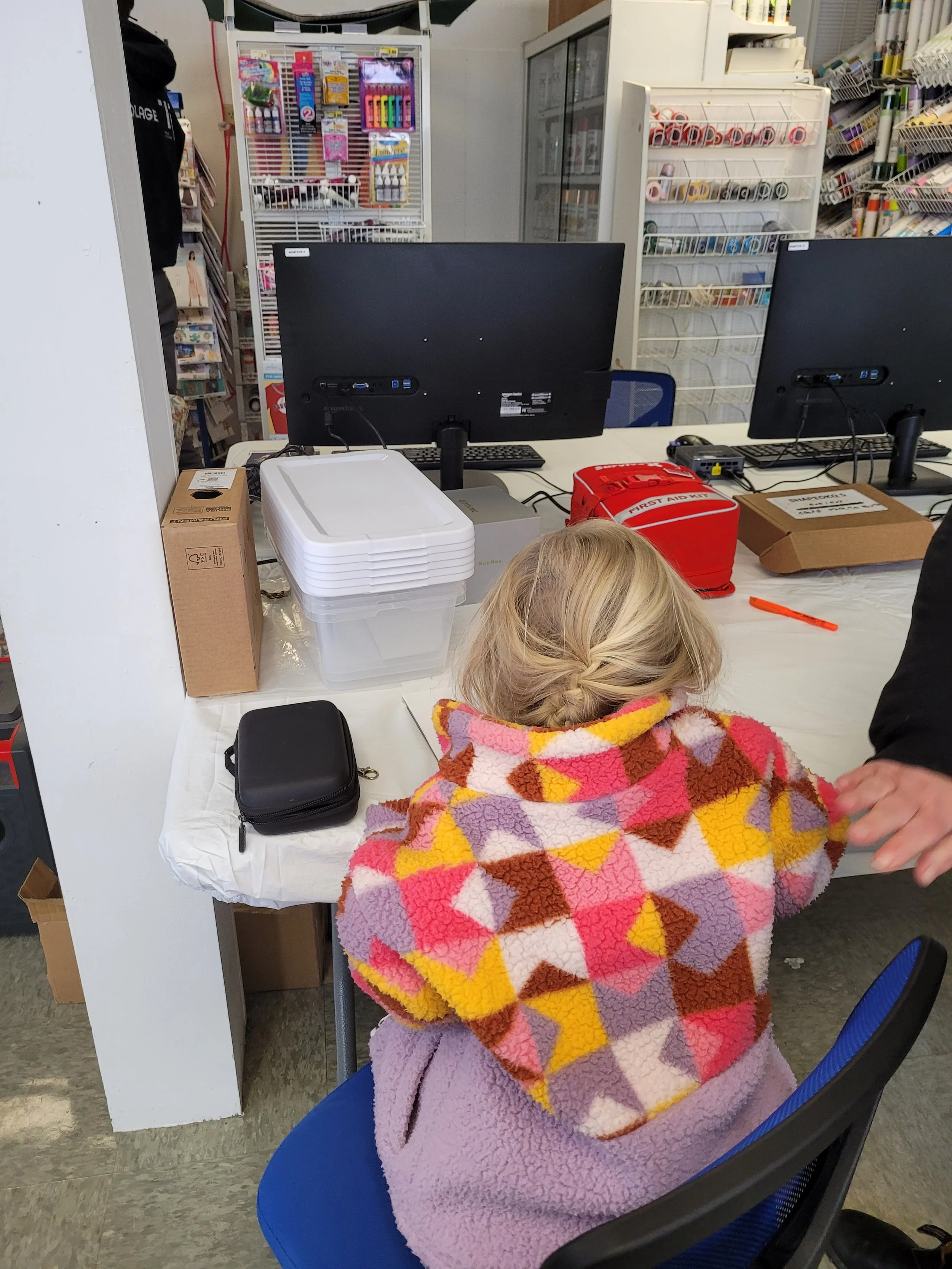
Elinor in the Fab Lab. Photo by Vic Spindler-Fox